
Tamil Nadu Forest Department moves to formalise Vulture Safe Zone planning
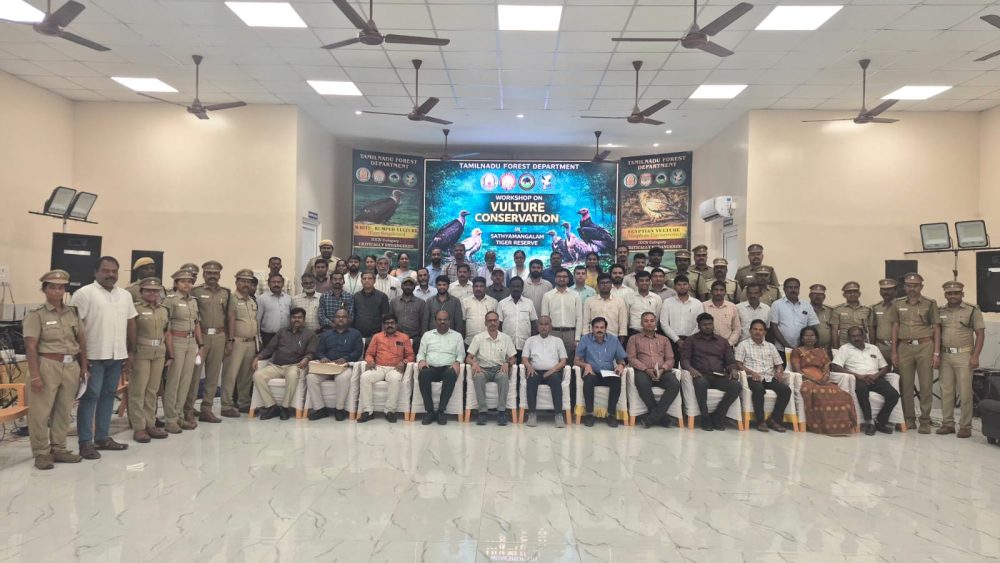
A collaborative workshop was convened by the Sathyamangalam Tiger Reserve Forest Division on February 27, 2026, under the guidance of the Advanced Institute for Wildlife Conservation (AIWC) of Tamil Nadu. This landmark event signified India’s transition from the Vulture Safe Zones (VSZ) concept toward a formalised, state-backed conservation framework, bringing together a diverse coalition of stakeholders, including the Department of Drug Control, Animal Husbandry, Cattle Associations, and NGOs including Arulagam (SAVE partner).
The VSZ concept was originally developed by SAVE partners and the first to be certified and endorsed by SAVE is the Gandaki-Lumbini VSZ in southern Nepal. In Bangladesh, the government has gazetted two VSZs giving them formal recognition there. In India, however, the concept had not previously received formal recognition or attention even though the National Vulture Action Plan 2020-2025 does include the creation of VSZs in each state as an objective.
This Tamil Nadu Forest Department meeting was attended by senior officials, including Mr. A. Udhayan, PCCF & Director of AIWC; Mr. K. Rajkumar, IFS, Field Director of Sathyamangalam Tiger Reserve; and Mr. P. Kirubha Shankar, Field Director of Mudumalai Tiger Reserve. Alongside dignitaries from the Departments of Wildlife Biology, Drug Control, and Animal Husbandry, this initiative marks an important milestone.
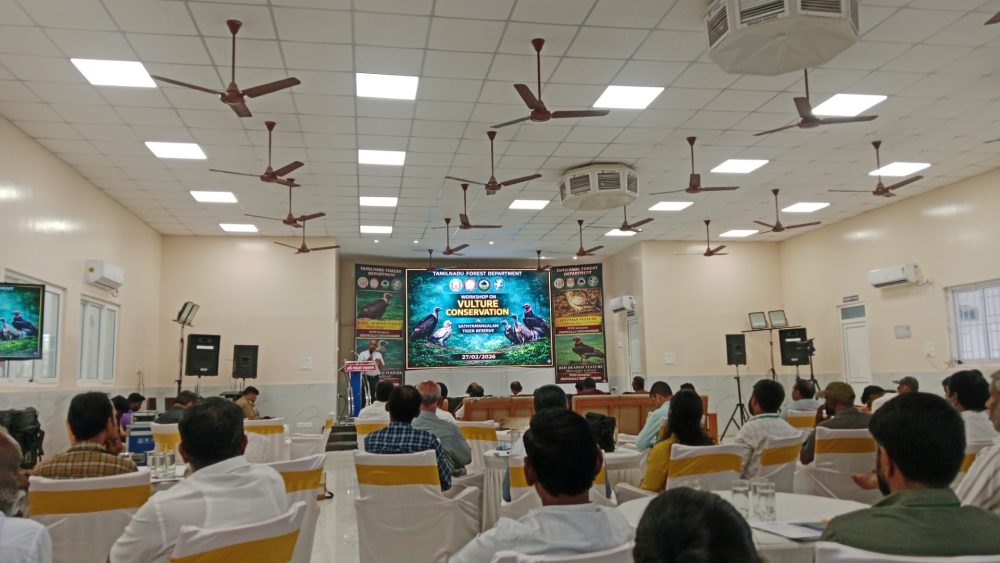
This represents the first state-level recognition of the need to implement VSZ actions on a landscape scale, focusing on where wild vulture populations still survive. This is therefore the starting point towards granting such areas legal status for active enforcement anywhere in India.
The workshop focused on the Nilgiris landscape—a stronghold for three of the world’s most threatened vultures, White-rumped, Indian Long-billed, and Red-headed Vultures — aiming to address the key issues for vulture conservation: Safe veterinary drugs, risks of people using poison-baits, and assuring safe nesting habitat.
1. Eradicating Toxic NSAIDs: A “Zero Tolerance” Approach
The workshop highlighted the lingering threat of prohibited Non-Steroidal Anti-Inflammatory Drugs (NSAIDs). Despite bans being in place, vulture-toxic diclofenac, aceclofenac, ketoprofen, flunixin, and nimesulide remain a threat through illegal veterinary use.
Key recommendations included:
- Pharmacy Certification: Introducing “Friend of Vultures – Green Pharmacy” certification for pharmacies that strictly adhere to safe practices, meanwhile enforcing license revocation for those selling any banned drugs.
- Price Parity & Accessibility: Addressing the problem that in some cases, there is a higher cost of safe alternatives like tolfenamic acid and meloxicam.
- Taking legal action under the Wildlife (Protection) Act, 1972, against unlicensed veterinary practitioners (quacks) who continue to use the outlawed toxic drugs.
2. Ensuring food-chain safety (carcass management)
Vultures rely on both wild and domestic carcasses. To ensure these food sources are “vulture-safe,” and no poison baits are used for targeting dogs or other mammals which may reach vultures the workshop proposed:
- Cattle Health Cards: Implementing a tracking system for non-goshala cattle to document medication history before they enter the food chain.
- Invasive Species Removal: Clearing Prosopis juliflora and other invasive plants to help vultures more easily spot and access wild carcasses in the landscape.
- SOPs for Testing: Establishing Standard Operating Procedures (SOPs) for a system of random NSAID testing of cattle carcasses in collaboration with SACON.
- Implementing the recently released Forest Department carcass disposal guidelines to ensure a safe and adequate food supply.
- Awareness on the illegality and wider risks of setting poison baits in cases of retaliatory poisoning (of dogs or large carnivores).
- Ensuring compensation schemes are implemented for any loss of livestock to wild carnivores.
- Further pharmacy drug store raids as were done earlier by the Tamil Nadu drugs authority.
3. The Vulture Safe Zone (VSZ) Framework
The formal demarcation of the proposed VSZ will focus on active vulture nesting and foraging ranges.
- Interstate Collaboration: Recognizing that vultures do not respect political borders, the workshop called for a centralised network between Tamil Nadu, Karnataka, and Kerala to monitor vulture populations and veterinary drug use across the wider Nilgiri Biosphere Reserve.
- Technological Integration: Vulture monitoring will be integrated with the M-STrIPES (Monitoring System for Tigers – Intensive Protection and Ecological Status) to provide real-time data on nests, roosts, and mortality.
A Collaborative Vision
The workshop concluded with a call to involve multi-stakeholders and local communities in making the Nilgiris Vulture Conservation Programme more visible. By bridging the gap between wildlife biology, veterinary science, and drug regulation, Tamil Nadu is laying the groundwork for a truly “Vulture Safe Zone” where the “Nature’s Clean-up Crew” can thrive once again.
The following organisations attended the meeting:
- Assistant Dir. Drugs Control, Food Safety and Drug Administration Dept, Coimbatore North Zone
- Assistant Dir. Drugs Control, Food Safety and Drug Administration Dept, Coimbatore South Zone
- Assistant Dir. Drugs Control, Food Safety and Drug Administration Dept, Gobi Zone, Erode
- Regional Joint Dir. Animal Husbandry, Udhagamandalam, Nilgiris
- Regional Joint Dir. Animal Husbandry, Gobi, Erode
- The Pharmacy Association, Gobi, Erode Division
- The Pharmacy Association, Nilgiris District
- Director, Salim Ali Centre for Ornithology & Natural History (SACON), Coimbatore
- Dr. B. Ramakrishnan, Asst. Professor, Govt. Arts College, Ooty
- Mr. S. Bharathidasan, Secretary, Arulagam, Coimbatore,
- Mr. D. Boominathan, Deputy Team Leader-WGNL, WWF-India.
- Mr. T. Sakthivel, Secretary, Sathyamangalam Environment Wildlife Association, Erode (SEWA)
Compiled by S Bharathidasan & Chris Bowden
For more information please email aiwcrte.arc26@gmail.com and arulagamgreen@gmail.com