
Uncategorised
Workshop in Thailand draws on SAVE for developing Red-headed Vulture Conservation Program
In situ captive breeding facility visit in HKK site, 19 October 2025. Since extirpation of the last Red-headed Vulture population from Thailand in 1992, there has been great interest in working towards their return. Although only small numbers of migrant Himalayan and Cinereous Vultures have been sighted in Thailand over the past decade, there are…
Read MoreSAVE Blueprint relaunched – 2025
The SAVE Blueprint is the Vulture Recovery Plan for South and South-East Asia and describes a set of Objectives and Actions based on evidence of effectiveness which the partners have agreed are essential if this overall goal is to be attained – to prevent the extinction and enable the recovery of Globally Threatened vultures to…
Read MoreIndian pharma company sets world record!

Indian pharma company sets world record for the largest vulture-safe drug-users drive engaging over 8,000 veterinary professionals Awareness among Indian vets of the vital role of vultures and the importance of using vulture-safe veterinary non-steroidal anti-inflammatory drugs (NSAIDs) was highlighted by Intas Pharmaceuticals Ltd., India, with world-record-setting engagement officially recognised by the World Book of…
Read MoreNew Darwin Initiative project to create Vulture Safe Zone in Nepal
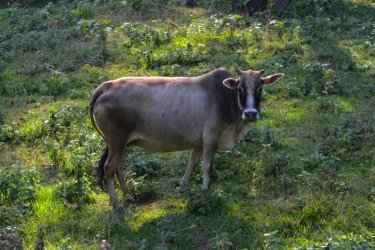
Two SAVE partners, the RSPB and Bird Conservation Nepal (BCN), together with a new partner, Renewable World, have launched a new project in Nepal to not only help vultures but also improve local livelihoods by using such comprehensive approaches as ‘cow retirement communities’ and boosting local dairy industries. Photo by: Suban Chaudhary, BCN With funding…
Read MoreNew paper highlights need for greater research and surveillance of NSAID poisoning in non-Gyps raptors
A Short Communication entitled “Non-steroidal anti-inflammatory drugs (NSAIDs) as a hidden threat to scavenging raptors beyond Gyps: A call for wider research and surveillance” (here) was published on 9 September in the Journal Environmental Toxicology and Pharmacology, highlighting the lack of knowledge of the causal mechanisms behind NSAID poisoning in non-Gyps vultures and other raptors.…
Read MoreNew paper reports the first flunixin-associated mortality of a Gyps vulture in Asia
The paper “First documented case of flunixin residue in a Himalayan Vulture Gyps himalayensis Hume, 1869 (Aves: Accipitriformes: Accipitridae) in India: conservation and veterinary implications” (see here), published in the Journal of Threatened Taxa on 26th September 2025, provides evidence for the first case of flunixin poisoning in Asian Gyps vultures, demonstrating that, despite more than…
Read MoreSAVE Online Open Day 2025 – recordings available!
On 10th September 2025 we held the 5th SAVE online open day. This annual event, initiated in 2020, is a way for us to showcase SAVE partners’ vulture work from across South and Southeast Asia, to encourage sharing of information and deeper collaboration in our partnerships, and to connect with others working in the sector.…
Read MoreTamil Nadu Issues Carcass Management Guidelines for Wild Animals
The Tamil Nadu Forest Department in South India has recognised that burying or burning wild animal carcasses means that vultures and other scavengers are not able to carry out their ecosystem services and may miss out on an important safe food supply. The Advanced Institute for Wildlife Conservation released the new guidelines at the inaugural meeting of…
Read MoreNew letter in Science reminds governments of their obligations to regulate vet drugs more effectively ahead of the 2026 CoP of the Convention on Migratory Species

The letter “Vulture conservation requires NSAID regulation”, published on 4 September in the journal Science, 30 years on from the beginning of the devastating effect of the NSAID diclofenac on vulture populations in South Asia, highlights how regulation of the veterinary use of non-steroidal anti-inflammatory drugs (NSAIDs) toxic to vultures remains inadequate. Widespread use of…
Read MoreSAVE the date – 10th September 2025

SAVE partners are pleased to announce the SAVE Online Open Day 2025 on 10th September 2025. When: Sep 10, 2025 07:30 AM London Topic: SAVE Open Day 2025 https://rspb.zoom.us/webinar/register/WN_SDX6_4H_Th2UFDkWmz-cpQ Join us to hear about the fantastic vulture conservation work of SAVE partners in South and South East Asia. The draft programme is shown below:…
Read More